Over a year ago I interviewed Julia Jacklin for 95bFM. I thought jeez, what if I published it myself as well as it being on the radio? And then did nothing about it.
Julia played Laneway, was awesome, and then probably got overplayed on that radio.
The good thing is, that, not long ago, I gave Julia a bit of a spin and having had a rest, she sounded really good. So I thought maybe I could bring my interview back to life ‘cos she’s bound to be coming up with album number two any minute now.
So here it is.
I had this overly romantic notion that Julia Jacklin’s pathway to becoming a singer might have been littered with back porch sessions around her childhood home in the Blue Mountains, west, but not quite as far west of Sydney as Bathhurst.
I imagined classic family and neighbourhood characters; white beards and lined faces under beaten up Akubra hats and the brutal Australian sun trading folky tales of great journeys, unfaithful lovers and reckless but loveable larrikins over a few simple chords as Kangaroos bounced through the haze in the distance and, perhaps even, a Dingo lay panting in some nearby dust.
But no. Julia Jacklin became a singer because, at ten years old, she saw Britney Spears on TV.
Even at her young age, she admired how much Britney was doing with her life and wanted to do the same.
The pressure was applied to her school teacher mum to organise singing lessons. Julia told me when I chatted to her for bFM that the pressure was also applied to apply some more pressure: “Why can’t you be more like Britney’s mum?”
Even though, quite clearly, Britneys mum was a pushy bitch who ended up nearly destroying her daughter. Things you don’t pick up on when you’re ten.
But mum did come through with the singing lessons, the only ones available in the area were of a classical nature and although the voice control was clearly beneficial it really wasn’t packing enough expressive punch for teenage Julia who was soon belting out Avril Lavigne covers in the high school band. No Youtube footage exists. Sadly.
She’s since dropped the surf wear and high jumps, but the whole thing got her hooked.
Then after high school travelling in South America she reconnected with an old friend; Liz Hughes. The two of them returned to The Blue Mountains and set about making music together, inspired and propelled by a common love of Indie-Appalachian folk trio Mountain Man, and songs written by Liz. They performed as Salta, who were labelled ‘Nu-folk’. Which is even sillier than ‘Indie-Appalachian’.
Playing in that set up, Julia found the confidence and belief to play more guitar and start writing songs rather than just singing.
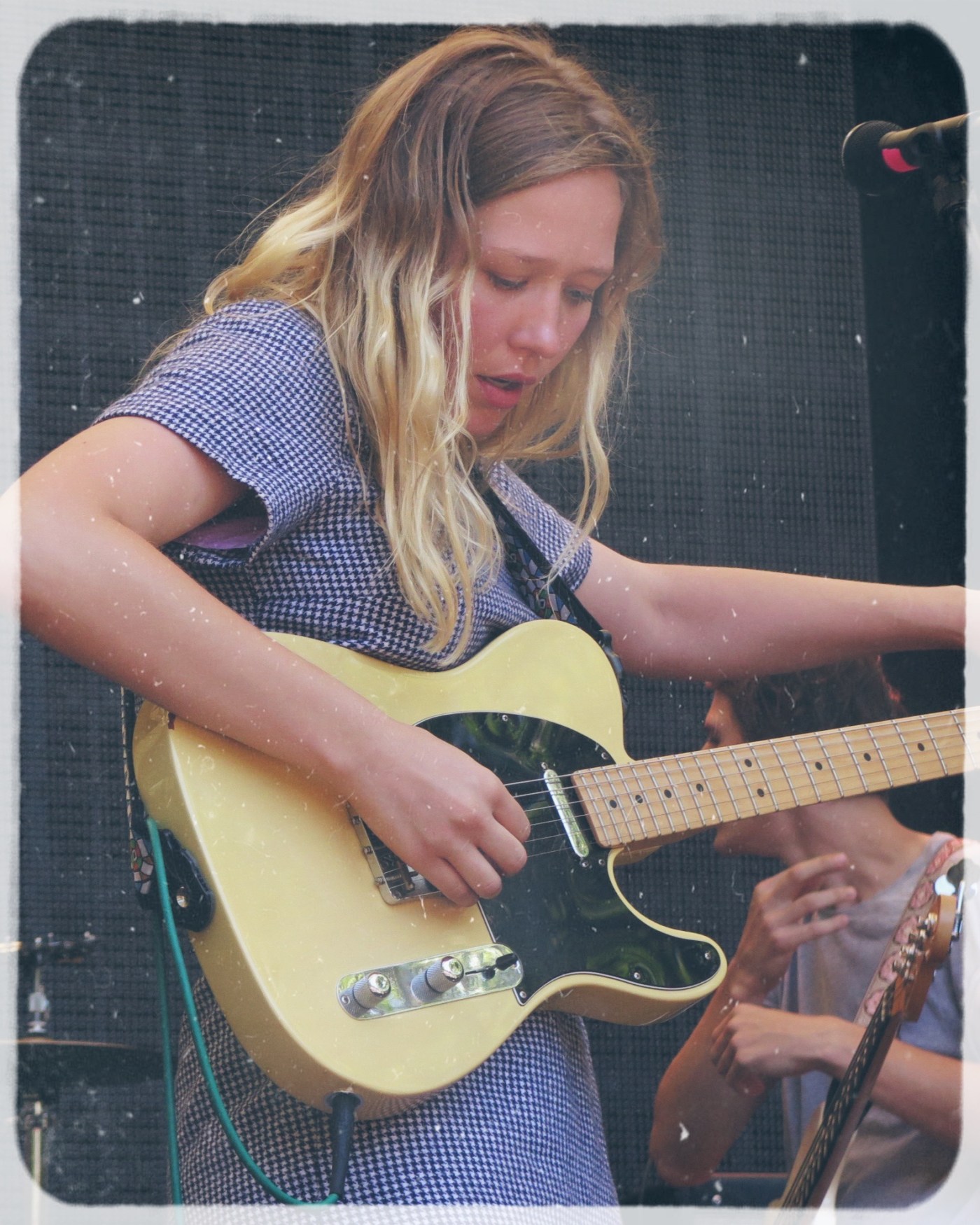
At this point, full of inspiration, Ms Jacklin begins to further her musical education, paying attention to performers she admires and learning from them. Recognising power of words and not to be afraid of them thanks to Fiona Apple, the cut and presence of an electric guitar from Anna Calvi and from Angel Olsen that interpretation beats technique. Julia actually plays her Telecaster to emulate Calvi, who she admits to being little obsessed with when I asked about it. It was never going to be any other way when she went guitar shopping. Julia’s is the creamy colour Fender calls Blonde, and Anna plays a Sunburst. By the way, I watched about 30 seconds of Anna Calvi, who’s completely new to me to back up my research and she looks utterly amazing. Thanks Julia.
And thanks Julia for ‘Don’t let the kids win’. It’s been out a while now, and it’s beautiful record.
At 25, working a day job on a production line making essential oils and living in a garage in Glebe, which is hardly west of Sydney at all, there was time available to concentrate develop more as a writer. Thinking more about turns of phrase and what’s going on around you, who you were, who you are and who you might become.
It’s a pretty bloody good debut album. Observed and wise, but without the bitterness that can often appear in such personal music. Not that there’s anything wrong with a little bitterness in a tune. Lucinda anyone ? Perhaps it’s her youth, but there’s a feeling that’s maybe more of a kind of bewilderment. And the record doesn’t come across as sad, it’s accepting of it’s fate and it’s moving on, parking what’s been learned in a song and getting on with life. Her voice is sweetly haunting.
The album was recorded in Lyttleton at Ben Edwards’ Sitting Room Studios. Aptly named indeed, because the records that have come out of there do make you feel like you’re intimate with artist and the songs. Whether it’s Marlon Williams, Nadia Reid or Aldous Harding, who’s album was the tipping point that got Jacklin across the Tasman to have her songs produced by someone she was confident wouldn’t ruin them. There’s plenty of room in these songs to over produce something, a lesser producer would be squeezing the kitchen sink in there with to much mandolin and fiddle but Edwards has a lovely light touch that lets everything breathe. Songs like this should be left alone, and they are.
It’s in this space that you can hear Australia. It’s not like the songs are about anything specifically Australian, it’s more of an effortless feel that seeps out of them. Dry and dusty and hot. Trying to stay in the shade. Miles from the coast. Miles from anything. Adrift between horizons.
She’s pleased for it to sound that way. It’s seems the Australians may suffer a little of their own cultural cringe and many artists try to avoid being ‘too Australian’, especially in a genre where the predominant species is the American singer/songwriter/guitarist. But as she says, it can be done tastefully. You don’t have to be singing about a Kangaroo.
And let’s face it, the place names alone are good enough reasons to sing about Australia; Adelaide, like hundreds of others, just sounds good in a song.
Naturally, she’s an admirer of master Australian songwriters like Paul Kelly, Tim Rogers, Courtney Barnett and a handful of others that were too hard to hear down the phone line to get correctly.
I’m a real big fan of the geography of music; songs that betray where they’re from either lyrically or sonically and the Australians can be bloody good at it.
What’s important to Julia is that whatever she’s writing is coming naturally. She’s not thinking to much about where to go from here artistically, she sounds like she could write any kind of song she wanted, but she has no intention of forcing herself down a particular path, like, I have to do ‘Indie rock’ now.
She doesn’t want to be writing songs based on things that aren’t being experienced in the present, she wants it to be about now rather than going back to her life before she was Julia Jacklin, 25, singer, rapidly rising on the international stage. She intends to live her life, and see what songs come. But at the same time, she didn’t sound too keen on writing songs about tour buses and petrol stations.
And it’s touring that brings her back to New Zealand of course. She was off to Europe pretty much straight after I spoke to her, and she’ll be back in the States in the middle of 2017 at the 3 day FYF fest in L.A after doing South by Southwest and a few other dates last year with Marlon WIlliams.
But she’s visiting us in between.
She snuck in and played a little show at The Golden Dawn in Auckland at the end of 2016, and yes, I kicked myself for missing it. Picking up as I did on an unfamiliar name, but not being committed enough to actually get along to the gig, family stuff or something. When I saw the photo of the natural looking girl in a pretty dress and that Blonde Telecaster I knew instinctively I had really fucked that Thursday night up.
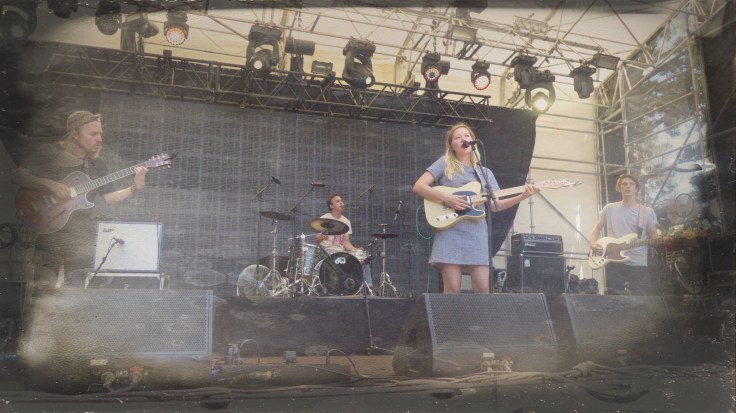
She was back smartly, and completely captivating at Laneway earlier in 2017, and in May she played Auckland again, this time at The Great South Pacific Tuning Fork, which if you’ve never been is right beside The Vector Arena.
Live, the songs become bigger, in fact when ‘Don’t let the kids win’ was recorded, many of the songs hadn’t even been played live, Not even ‘Pool Party’ which, incidentally, was a finalist in the 2017 Australian APRA Song of the year awards along with Nick Cave’s Skeleton Tree. I had a listen to the song that beat them both and, well, I didn’t listen to much of it frankly.
The songs and no doubt musicianship have been developing even further on the road, and they’ll no doubt be a touch louder and fuller in the live setting and work really well, like they did at Laneway. I worry sometimes at shows when the music is as spacious and languid such as these are on the album, that people who like to hang out by the bar talking loudly using the gig as a social occasion can destroy the music. So It’s pleasing that the songs will have the power to overcome the sound of house prices, ‘when we were in London’ or whatever it is they’re talking about back there.
Don’t let the kids win is well worth your 30 bucks (get the vinyl!) and she’s well worth seeing live, you might, like me, just be swept away.
I’m hanging out to hear Same Airport, Different Man. If she does play it, I’d like to think it’s because I asked her to. She hasn’t played it for a while apparently, feeling like she’s played it too much, when in reality, hardly anyone has heard it at all.
It sounds lyrically, almost James McMurtryish, and I’m not sure you could pay a song a higher compliment. Musically the tension builds over some sparse picking on that Blonde telecaster until it fades away and leaves you knowing someone’s sitting there under the fluorescent lights of the terminal on the cold shiny floor amongst the bags all alone. It’s gorgeous.
Footnote: She didn’t play ‘Same Airport’.


Leave a comment